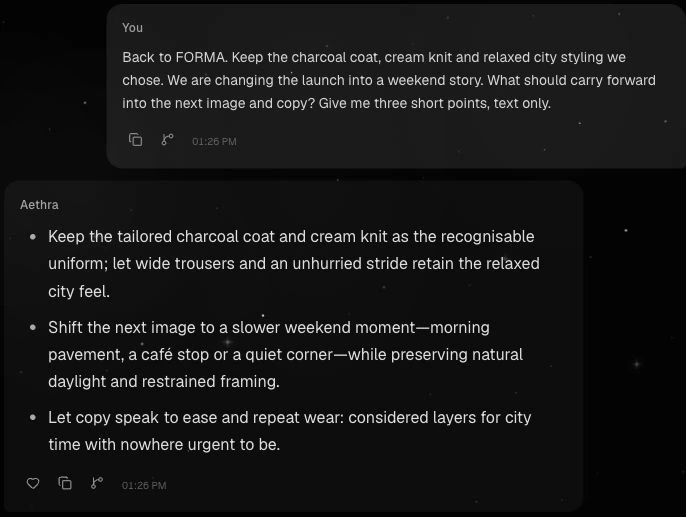
Ask what is known, and what is still open.
A research summary can sound convincing even when the evidence is incomplete. Ask Aethra to separate findings, assumptions and suggestions. Follow the source links for claims that matter to your decision.
Explore a question with Aethra, follow the sources and bring what you learn into your work. Keep the evidence visible while you decide what it means.
Evidence, before confidence.
A source card gives you somewhere to go next. Open the original, check the date and ask whether it actually supports the claim.
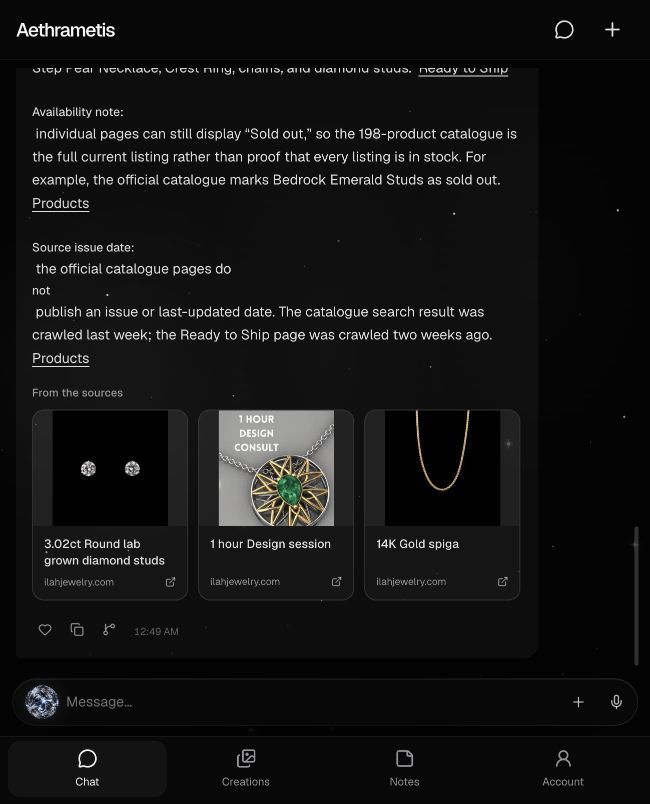
A research summary can sound convincing even when the evidence is incomplete. Ask Aethra to separate findings, assumptions and suggestions. Follow the source links for claims that matter to your decision.
A long report may contain only a few findings that matter for your project. Identify those, explain why they are useful and bring them into the brief, campaign or next conversation.
Sources can be out of date or disagree with each other. When you find a correction, bring it back to the project. Keeping the source connected helps you revisit a conclusion without losing the trail.
Work through a question and see what matters.
Explore clarityThere is a reason Aethra keeps your references, decisions and feedback connected. Here is how the pieces work together.
Inside the consistency processNo. Use the source links and review important claims, especially when information affects pricing, product availability or a public statement.
It brings relevant evidence and unanswered questions into view. You can then develop a brief, argument or direction while keeping the relationship to the sources clear.