You have already explained the idea, chosen a direction and worked through the details. Aethra uses relevant project context to help you continue without rebuilding the whole brief.
FORMA · a fictional project, continued
First, the city
Keep the why with the work.
FORMA, our fictional fashion example, starts with a charcoal coat, cream knitwear and a quiet city setting. The important part is why: the clothes should feel lived in, not staged. Keep that reason with the references so your next AI conversation has a useful starting point.
The brief changes
“Take it into the weekend. Keep the coat, the cream knit and the quiet tone.”
Illustrative summary of the project direction
Some things belong to this project.
The restrained FORMA brief belongs to this collection. It need not become a rule for a jewellery project or a brighter summer campaign. Tell Aethra which references and choices belong here, and which preferences apply more broadly.
Continue from here
Change your mind without starting over.
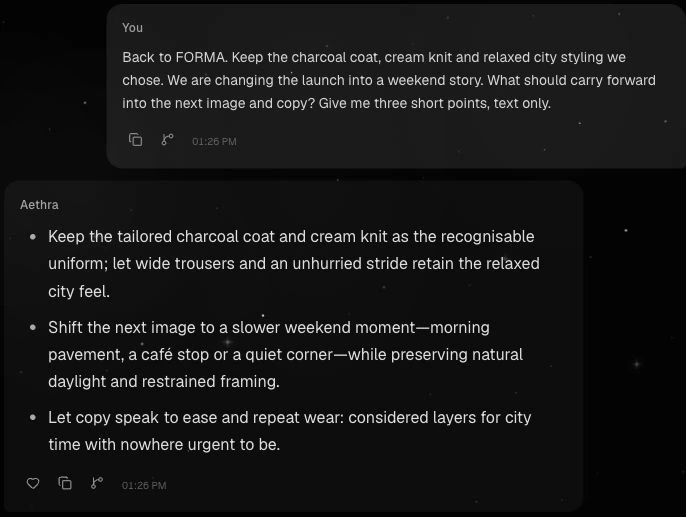
Perhaps the launch becomes a weekend story. Keep the coat and relaxed styling; change the setting and opening line. Explain that change in the project conversation so the next request can use the current direction instead of rebuilding the brief.
How does Aethra keep track?
There is a reason Aethra keeps your references, decisions and feedback connected. Here is how the pieces work together.
No. It means preserving and selecting useful context with appropriate scope. Available context can be incomplete, so confirm important facts and decisions when they matter.
Can a new project have a different direction?
Yes. Project-specific direction can differ from broader preferences. State what applies to the new project and which earlier assumptions should be left behind.